Watches · 10 volumes
A heartbeat you can wear
Time, held still
Watches
A mechanical watch is a small, stubborn miracle: a spring, a wheel and a balance beating several times a second, for years, against the shocks of an ordinary life. It does nothing a phone cannot do. And still we lift it to the ear as if listening to something alive.
Workshops in the valleys
The great watch names grew from cold winters, farmhouses and patient hands: families filing wheels by lamplight, cabinotiers in Geneva, salesmen crossing borders with samples in their coat pockets. Their competition was measured in seconds per day, in observatory trials and in watches that survived rain, sea water and altitude.
Each volume follows how a reputation was built, tested and sometimes nearly lost: the crises, the quartz years, the reinventions that turned a necessity into an heirloom.
The poetry of the mechanism
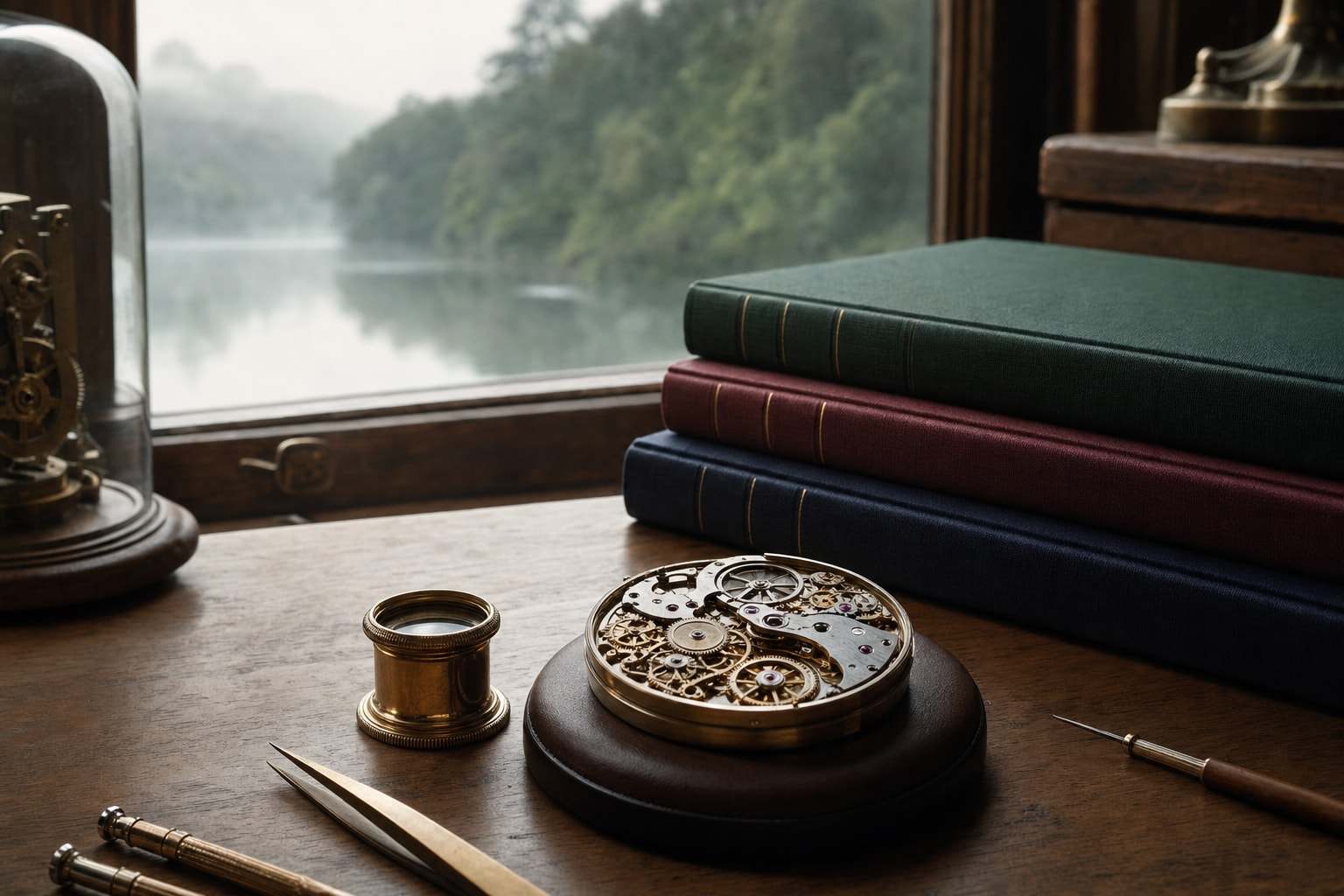
Turn a fine watch over and you see what was never meant to be seen by most people: bevelled edges, polished screws, bridges finished with stripes of light. It is beauty made for its own sake, and for the one person who will look closely.
There is an ethics in that. It says that work hidden from view should still be done well. It says that care is not a performance.
Why it still matters
We live surrounded by time we cannot feel: notifications, deadlines, the endless present of the screen. A watch gives time back its body. It rests on the pulse, it is wound by a hand, it is passed from one generation to the next with a story attached.
These books are about that story, and about how small instruments came to hold some of our largest feelings.
You never actually own a Patek Philippe. You merely look after it for the next generation.
The volumes
Watches on the shelf
Ten volumes on the makers who turned the measurement of time into an art of patience.