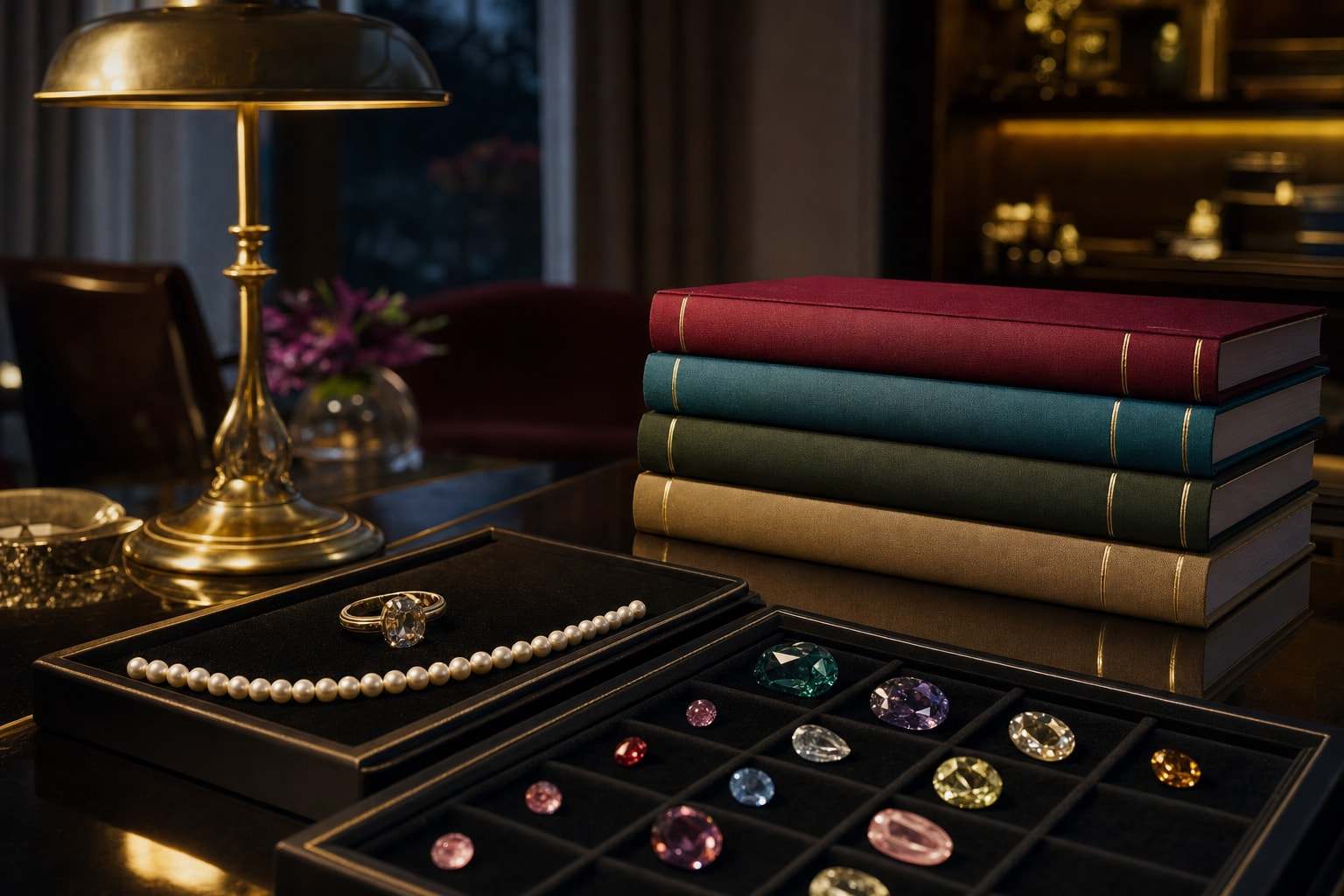
Jewellery · 4 volumes
Promises cut in stone
Light, made to stay
Jewellery
Jewellery is the oldest luxury there is. Long before the first car or the first couture house, people pierced shells and threaded them on sinew, because a body adorned is a body remembered. The houses in these volumes carried that ancient impulse into Paris, New York and Rome.
From workshop to window
A Paris workshop taken over in 1847. A New York shop of stationery and fancy goods opened in 1837. A Roman silversmith’s store. These beginnings were modest, and their growth depended on craftsmen who set stones, designers who drew panthers and flowers, and merchants who knew how to tell a story in a window.
ICON ATLAS separates the legend from the ledger: who designed, who made, who sold, and when.
The meaning of a stone
A gem is millions of years of pressure, a moment of discovery and many hours of cutting. Yet what makes a jewel unforgettable is rarely its carat weight. It is the occasion. The ring given at a station platform. The brooch worn to a funeral. The necklace inherited and finally understood.
Great jewellers understood that they were not selling minerals. They were giving form to promises.
Why it still matters
Beauty that lasts longer than we do asks something of us: to be worthy of passing it on. In a culture of the disposable, jewellery remains stubbornly permanent. It keeps memory in metal.
A thing of beauty is a joy for ever: / Its loveliness increases; it will never / Pass into nothingness
The volumes
Jewellery on the shelf
Four volumes on the houses that set light into gold, and the stories people asked them to keep.